Home · What · Why · Process · About · Services · FAQs · Booking
Taylor Renee Birth
Placenta Encapsulation in San Francisco
Home · What · Why · Process · About · Services · FAQs · Booking
What is Placenta Encapsulation?
Placenta encapsulation is the process of carefully preparing your placenta after birth by dehydrating and grinding it into a fine powder, which is then placed into capsules for you to take during the postpartum period.
Home · What · Why · Process · About · Services · FAQs · Booking
Why do people choose placenta encapsulation?
People choose placenta encapsulation for many different reasons. Some report that taking their placenta capsules supports their postpartum experience, including:· Mood & emotional well-being
· Energy during postpartum recovery
· Milk supply
· Replenishing iron after birth
· A smoother postpartum transition
Research on placenta encapsulation is limited, and these reported benefits have not been established by current research. Experiences vary from person to person.
Home · What · Why · Process · About · Services · FAQs · Booking
From birth to capsules
01 — Store
After birth, safely store your placenta in a cooler or refrigerator. I’ll coordinate pickup or drop-off based on your location.02 — Prepare
I carefully prepare, dehydrate, grind, and encapsulate your placenta using food-safety and sanitation practices.03 — Deliver
Your finished capsules are delivered back to you, along with clear storage and dosage instructions.
Home · What · Why · Process · About · Services · FAQs · Booking
Meet Taylor
Hi, I’m Taylor! I’m a student midwife, birth worker, and mom based in San Francisco.I began supporting families as a birth doula in 2019 and am currently completing my midwifery education while apprenticing in community birth. I’ve had the privilege of supporting many families through pregnancy, birth, and postpartum.My approach to placenta encapsulation is rooted in thoughtful care, respect for your choices, and careful attention to detail. Your placenta was part of your pregnancy and your baby’s story, and I treat it with that in mind.I live in San Francisco with my husband, our two little ones, and our very friendly cat. When I’m not at a birth or studying midwifery, I’m usually outside with my kids, baking, or moving my body.
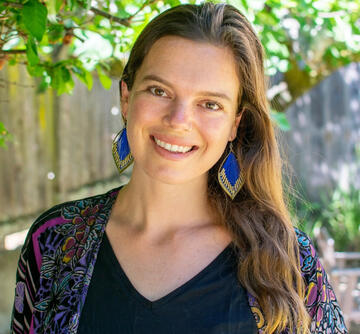
Taylor Renee Regan
(949) 390-3434
[email protected]
Home · What · Why · Process · About · Services · FAQs · Booking
Placenta Encapsulation Services
Capsules — $325
Choose steamed or unsteamed preparation. Your placenta is dehydrated, ground, and encapsulated for simple postpartum use.Smoothie Powder — $270
Your placenta is prepared, dehydrated, and ground into a fine powder for adding to smoothies.Optional Add-Ons:
Placenta tincture — $55
Placenta salve — $40
3 frozen smoothie portions — $30
Placenta print — $15
Umbilical cord keepsake — complimentaryPickup & Delivery:
San Francisco — $20
Marin or Alameda County — $40
Drop-off/pickup in the Richmond District — free
Home · What · Why · Process · About · Services · FAQs · Booking
Frequently Asked Questions
How should I store my placenta after birth?
Keep your placenta refrigerated or in a cooler with plenty of fresh ice until pickup.
———
What is the difference between steamed (TCM) and unsteamed (raw) preparation?
Steamed preparation includes an additional steaming step before dehydration, while unsteamed preparation goes directly to dehydration. There is currently no evidence that one method provides greater benefits than the other, so the choice comes down to personal preference. Anecdotally, some clients describe the steamed method as feeling more grounding and the unsteamed method as more energizing, though experiences vary.
———
When will you pick up my placenta?
I'll coordinate pickup from your home or birth location after your baby is born.
———
How long does the process take?
Your finished capsules are typically returned within 2-3 days of pickup.
———
How many capsules will I receive?
The number of capsules varies depending on the size of your placenta and the add-ons you select, but most placentas yield around 90–120 capsules.
———
Are there times when my placenta cannot be encapsulated?
Yes. Certain circumstances may make a placenta unsuitable for encapsulation. If you're unsure, reach out and I'll help you determine whether your placenta can be safely processed.
Home · What · Why · Process · About · Services · FAQs · Booking
Ready to book?
I’d be honored to care for your placenta after your birth. Once you book, I’ll send you everything you need to know about storage, pickup, and what to expect.
Booking & Cancellation PolicyA $100 reservation fee is required to reserve placenta services for your estimated due date. This fee is applied toward the total cost of your services.If you change your mind and cancel placenta services before your baby is born, your reservation fee is nonrefundable. I reserve availability around your estimated due date and may turn away other clients in order to do so.If circumstances surrounding your birth make placenta encapsulation impossible or medically inadvisable—for example, if your placenta must remain with pathology or is otherwise unavailable for encapsulation—please contact me. In circumstances outside of your control, your reservation fee will be refunded.If I am unable to provide your reserved service for any reason and cannot arrange an appropriate backup, your reservation fee will be refunded in full.Placenta Storage & SafetyYour placenta must be handled and stored appropriately after birth in order for me to encapsulate it safely.After birth, the placenta should be placed in a clean, leak-proof container or bag and refrigerated as soon as possible. If refrigeration is not immediately available, it should be kept in a cooler with adequate ice until it can be refrigerated.If the placenta will not be encapsulated within the appropriate refrigeration window (3-5 days), it should be frozen.If I have concerns about the placenta's storage, handling, condition, or suitability for consumption, I reserve the right not to encapsulate it. This decision will always be made with safety in mind.If the placenta cannot be encapsulated because it was not stored or handled according to the provided instructions, the $100 reservation fee is nonrefundable.PathologyIf your care team recommends sending your placenta to pathology, let them know that you hope to take your placenta home and ask whether this is still possible. Depending on the reason for examination and how the placenta is handled, encapsulation may or may not remain an option.If pathology or circumstances surrounding your birth make your placenta unavailable or unsuitable for encapsulation through no fault of your own, your reservation fee will be refunded.When I may decline encapsulationI may decline to encapsulate a placenta if I have concerns about its storage, handling, condition, contamination, or suitability for consumption. Certain infections, pathology procedures, medications, or other circumstances may also require additional consideration. If you're unsure whether something that occurred during pregnancy or birth affects your ability to encapsulate, please reach out—many common birth interventions do not automatically prevent placenta encapsulation.